The Prismatic Springs Are Hot
- Stuart F. James

- Mar 31
- 1 min read
Updated: Apr 4

The Prismatic Springs Are Hot Literally
The Prismatic Springs are hot in temperature and appearance. They are a geothermal vortex.
Yellowstone National Park is a place I adore, full of wonder and beauty. One of the park's most stunning attractions is the Great Prismatic Springs, offering an unforgettable experience.
These are Yellowston'es Largest Hot Springs
The Grand Prismatic Springs, Yellowstone's largest hot spring, measures 200-330 feet across and is over 121 feet deep.

Hot Springs
Hot springs are the most common hydrothermal features in Yellowstone because their plumbing is unrestricted.
When superheated water ascends to the surface, it cools, sinks, and is replaced by hotter water from below.
This circulation prevents the water from reaching the temperature needed to cause an eruption.
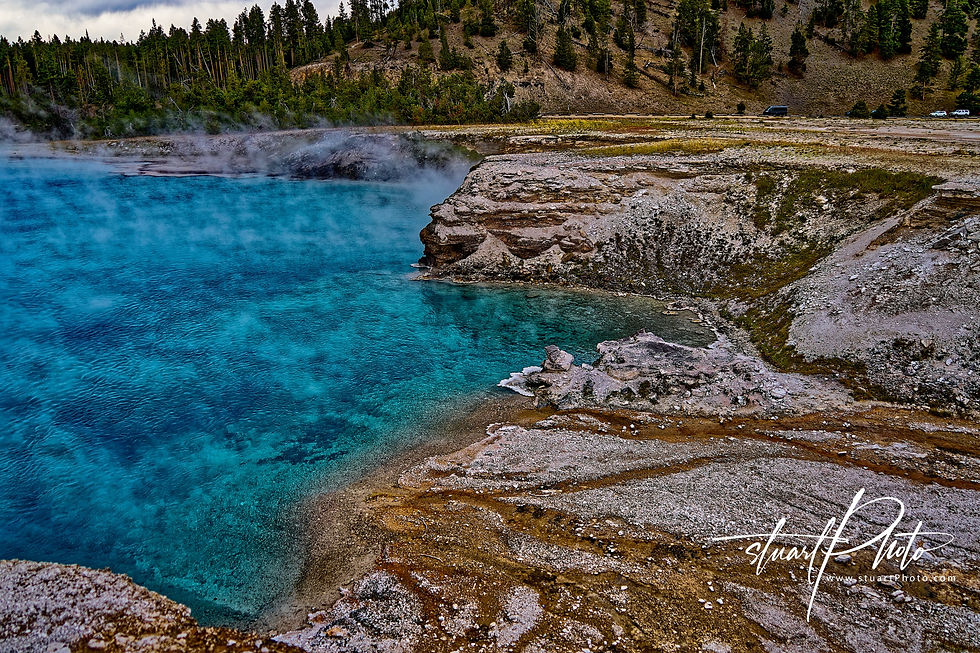
Color and Heat Lovers
Hydrothermal features serve as habitats where microscopic organisms can survive and flourish. These organisms are known as thermophiles: "thermo" meaning heat and "phile" meaning lover.
Even though they are invisible to the naked eye due to their tiny size, trillions of them cluster together to form masses that display color. They receive nourishment from energy and chemical components.
Colorless and yellow thermophiles grow in the hottest water.

Orange, brown, and green thermophiles grow in cooler waters.

Picture living in temperatures close to boiling, within hydrothermal environments with the same alkalinity as baking soda, or in water so acidic it can create holes in fabric. Microorganisms in Yellowstone require these extreme conditions to thrive. Source National Park Service
Stuart F. James

Comments