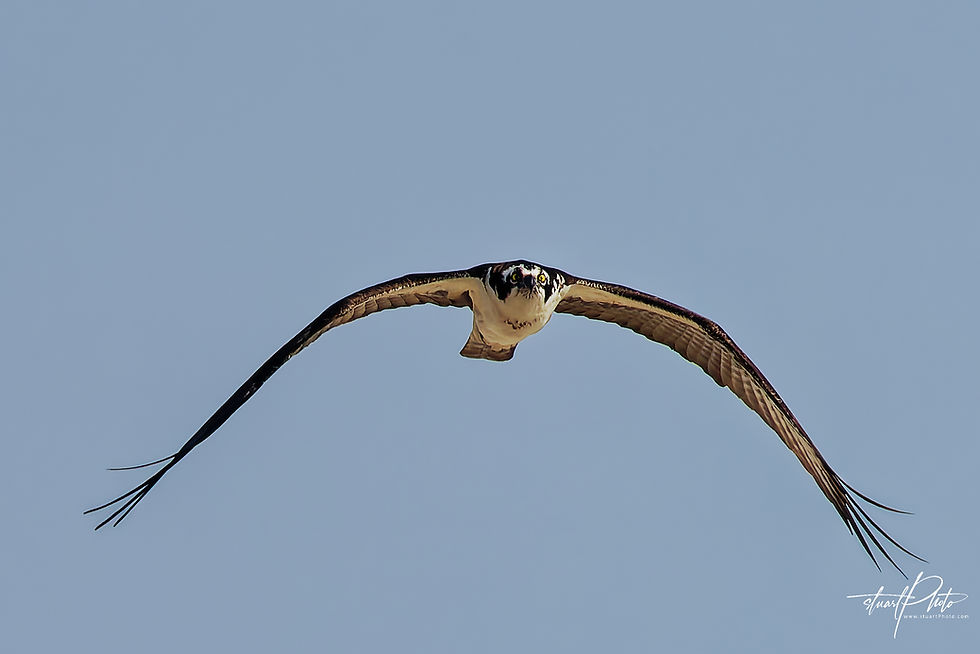
Experiencing A Face-to-Face Encounter With An Osprey in Flight
- Stuart F. James

- Apr 23
- 4 min read
Updated: Apr 30
Witnessing an osprey in flight is a rare and unforgettable experience. These majestic birds, with their impressive wingspan and sharp hunting skills, captivate anyone lucky enough to see them up close. My recent encounter with an osprey was a moment of pure luck and awe, a face-to-face meeting that left a lasting impression. This post shares that experience and explores what makes ospreys such fascinating creatures.
The Unexpected Moment of Luck
I was on a balcony at Orange Beach, Alabama, observing the prevelence of wildlife and humans to boot. An Osprey was continually flying by the balcony, but as luck would have it it was either too close and fast or too far to catch that image I wanted of it in flight.
The sky was clear, and the air was still. Suddenly, I saw a bird on the horizon flying straight toward our balcony. As it apporached in an apparent head on collision with me and the balcon I realized it was the evasive osprey gliding gracefully, its wings wide and steady. It flew straight at me and my camera lens getting a lot closer than I expected, and for a brief moment, the Osprey focused straight at me as though it might come in for the kill. That instant felt like a rare gift — a connection between human and wild bird-with the Osprey giving me that stare in flight.
This kind of encounter depends on more than just being in the right place. It requires patience, awareness, and a bit of luck. Ospreys are skilled hunters, often flying high before diving to catch fish. Spotting one in flight means watching for subtle signs: a sudden shadow, a sharp silhouette against the sky, or a flash of white under the wings. Moreover, sometimes persistence is the key to getting that face-to-face moment in an image.
Understanding Ospreys and Their Flight
Ospreys are birds of prey that specialize in fishing. Their flight is powerful yet elegant, combining strength with precision. Here are some key features that make their flight unique:
Wing Shape: Long, narrow wings with a slight bend allow for soaring and hovering.
Flight Pattern: They often hover briefly before plunging feet-first into water to catch fish.
Vision: Exceptional eyesight helps them spot prey from high above.
Adaptations: Their talons have spiny pads to grip slippery fish securely.
Watching an osprey in flight reveals these adaptations in action. The bird’s wings beat steadily, then spread wide to glide. When it spots a fish, it shifts focus, adjusts its angle, and dives with remarkable speed and accuracy.
The Importance of Being Present in Nature
This encounter reminded me how important it is to slow down and be present. Nature offers moments of beauty and surprise, but only if we pay attention. Here are some tips for increasing your chances of seeing ospreys or other wildlife:
Choose the Right Location: Ospreys prefer areas near rivers, lakes, or coastal waters. In this instace the ocean was in front of me and there was a river behind me...the Osprey flew wide circles covering both areas. I watched it fly for three days before I had the face to face encounter.
Go During Active Times: Early morning or late afternoon are often best for bird activity.
Stay Quiet and Still: Sudden movements or noise can scare birds away. In this instace, I was on the 10th floor overlooking the ocean, so neither my movements or noise were a factor
Be Patient: Sometimes, the best sightings come after long waits. This face to face certainly did.
What Makes Ospreys Special Among Birds of Prey
Ospreys stand out because of their close relationship with water and fish. Unlike many raptors that hunt on land, ospreys have evolved to thrive in aquatic environments. Their diet consists almost entirely of fish, and their hunting style reflects this specialization.
They also build large nests near water, often reusing the same site year after year. These nests can grow quite large, made from sticks and lined with softer materials. Watching ospreys care for their young adds another layer of fascination to observing these birds.
Capturing the Moment: Photography Tips for Birdwatchers
If you want to document your own osprey encounter, here are some practical tips:
Use a Telephoto Lens: A lens with 300mm or more lets you capture details from a distance. I was using a 200-600mm Sony emount.
Shoot in Burst Mode: Birds move quickly, so multiple shots increase your chances of a great photo.
Focus on the Eyes: Sharp eyes make wildlife photos more engaging.
Mind the Light: Early morning or late afternoon light adds warmth and depth.
Stay Steady: Use a tripod or stabilize your camera to avoid blur. In this instance, I had to grab the camera from the condo and shoot the Osprey hand held.
Even if you don’t get a perfect shot, the experience of watching an osprey in flight is rewarding on its own.
Reflecting on the Encounter
That brief moment with the osprey felt like a reminder of nature’s unpredictability and beauty. It showed how a bit of luck, combined with patience and respect for wildlife, can create unforgettable memories. These birds are not just impressive hunters; they are symbols of the wild places that still exist around us.
If you have the chance to see an osprey in flight, take it. Watch closely, appreciate the skill and grace, and remember that sometimes, the best experiences come when you least expect them.

Comments